

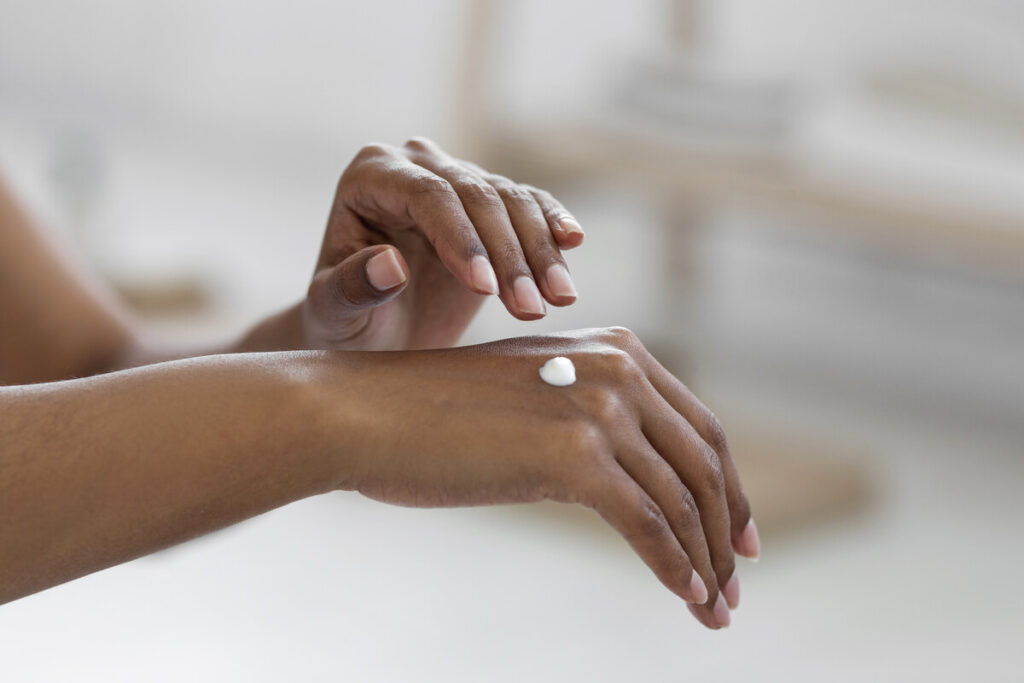
A bottle of body lotion can cost a few dollars or a small part of your weekly grocery budget. When dermatology researchers at Northwestern University looked at the best-selling moisturizers in the US, they found that a higher price per ounce did not reliably buy you a gentler formula.
If you are trying to keep dry dorm-room skin in check without wrecking your budget, the label on the back of the bottle tells you more than the claims on the front. Here is what the research and the federal labeling rules actually say.
What the moisturizer study looked at
The team analyzed the top 100 best-selling whole-body moisturizers on Amazon, Target and Walmart as of August 2016, which came to 174 unique products once duplicates were removed. They left out anything marketed for a specific body part, such as face or hand creams. The results were published in JAMA Dermatology in 2017.
Price varied enormously. The median product cost $0.59 per ounce, but prices ranged from $0.10 to $9.51 per ounce, so the most expensive option cost about 95 times as much per ounce as the cheapest. Lotions were the most common format and also the least expensive per ounce (median $0.49), while creams, butters and oils cost more.
Pricier labels did not mean fewer allergens
The researchers checked every ingredient list against a standard panel of common contact allergens used by dermatologists in North America. Only 12% of the products (21 of 174) contained none of them. Fragrance, parabens and tocopherol (a form of vitamin E) were the most frequent.
Marketing claims came with a price tag. Products labeled “dermatologist recommended” had a higher median price per ounce ($0.79) than those without that claim ($0.59). Yet products free of the listed allergens were not statistically more expensive than products containing at least one.
The “fragrance free” claim was also less reliable than it sounds: 18 of the products making it (45%) still contained at least one ingredient that can cross-react with fragrance allergy, including some botanical extracts. The FDA notes something similar on its fragrances in cosmetics page: even some products labeled “unscented” may contain fragrance ingredients, and fragrance components can appear on a label simply as “Fragrance.”
How to read the ingredient list before you pay
Under FDA labeling rules, cosmetic ingredients must be listed in descending order of predominance. In plain terms:
- The first ingredient is the one present in the largest amount. Most lotions and creams are emulsions, a mix of water and oils held together by an emulsifier, so it is normal to see water near the top. That is not a scam, but it does mean you are paying mostly for the formula, the packaging and the brand.
- Ingredients present at 1% or less, along with color additives, can be listed in any order after the others. A “featured” ingredient at the very end of the list may be there in a tiny amount.
- Compare price per ounce, not price per bottle. Many store shelf tags show the unit price, which makes it easy to line up a $4 bottle against a $25 jar.
What the study cannot tell you
This analysis compared prices, claims and ingredient lists. It did not test which moisturizers work best, and the authors pointed out that easy comparison data on effectiveness is not available. Their conclusion was that “dermatologists should balance consumer preference, price, and allergenicity in their recommendations.”
The prices also date from 2016, so today’s numbers will be higher, and best-seller lists change. Two of the authors also disclosed an ownership interest in an online resource that recommends skin care products. What still holds is the core lesson: the price and the marketing claims on the front of a bottle are poor guides to what is inside it.
A budget-friendly approach
Start with the cheapest product in a format you will actually use, check the ingredient list for anything you already know irritates your skin, and give it a couple of weeks before trading up. If you have persistent itching, a rash or eczema, the campus health center or a dermatologist can help you figure out what to avoid, which a label alone cannot do.