

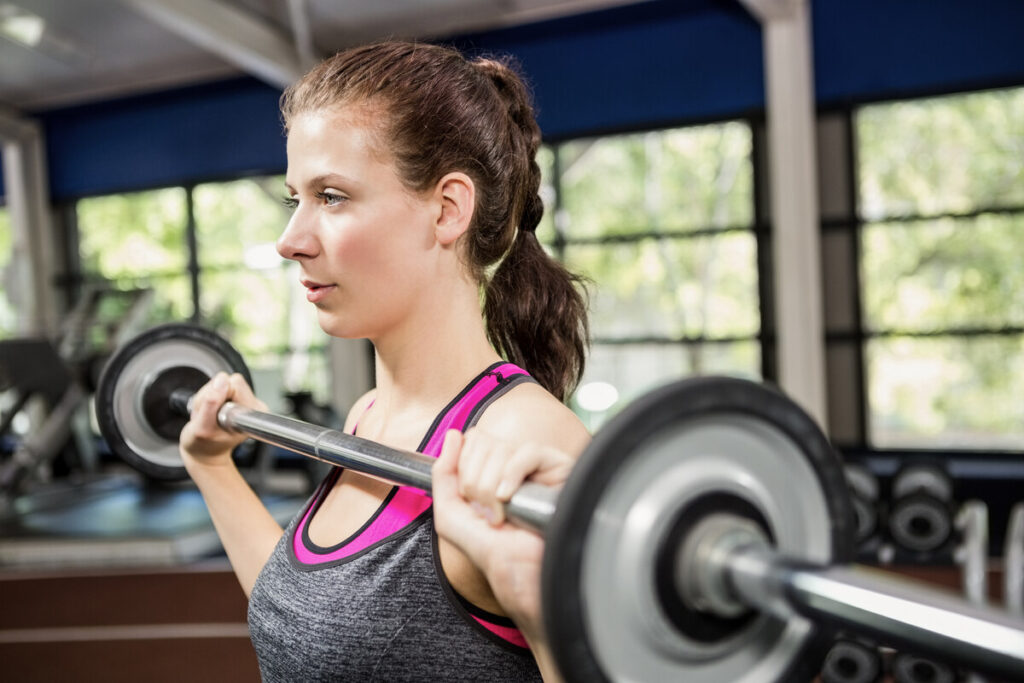
If you skip meat and lift weights, you have probably been told you will never build muscle. The research is more encouraging than that, with one important condition: you have to eat enough protein, and that takes more planning without meat.
A new trial in older adults found a real gap between vegetarians and meat eaters. Earlier trials in people in their twenties found none. The difference between those results says a lot about what matters most when you train.
What the newest trial found
The IMPACT trial, published in The American Journal of Clinical Nutrition, was led by the Amsterdam University of Applied Sciences. It randomly assigned 108 adults aged 55 and older (median age 66, 58% women) to a lacto-ovo vegetarian diet or an omnivorous diet. Everyone did resistance training three times a week for 12 weeks and chose their own food, aiming for at least 1.2 grams of protein per kilogram of body weight per day.
Both groups got stronger. Leg press strength and a chair-stand test improved in both, with no difference between them. Muscle mass in the arms and legs also went up in both groups, but the meat eaters gained about 0.66 kg (roughly 1.5 lb), compared with 0.38 kg (under 1 lb) for the vegetarians.
The likely reason is simple. Both groups hit the minimum target, but the vegetarians ended up eating less protein overall: 1.24 g/kg a day versus 1.58 g/kg for the omnivores. The study could not show that the vegetarian diet was “as good” for muscle, though the gap was small. One detail worth knowing: the trial was partly funded by the dairy cooperative FrieslandCampina.
Younger lifters tell a different story
Two trials in young adults, closer to a college student’s age, matched protein between groups on purpose. That changed the outcome.
In a study published in Sports Medicine, researchers in São Paulo, Brazil, followed 19 young men who were long-time vegans and 19 who ate meat, all around 26 years old and new to lifting. They trained twice a week for 12 weeks, and everyone’s protein was brought up to about 1.6 g/kg a day, using soy protein for the vegans and whey for the omnivores. Both groups added about 1.2 kg of leg lean mass, with no difference in muscle size or strength gains.
A University of Exeter trial in The Journal of Nutrition went further. Twenty-two men and women around 24 years old trained five days a week for 10 weeks on a high-protein diet of about 2 g/kg a day, either omnivorous or built on non-animal protein sources. Thigh muscle volume rose by about 8.3% in both groups. Note that the vegan diet relied heavily on mycoprotein, and the study was funded by Marlow Foods, the company that makes Quorn.
Total protein seems to matter more than the source
Put together, these studies point the same way: when protein intake is similar and high enough, plant-based lifters build muscle much like meat eaters. When it falls short, the gap shows up.
How much is enough? A meta-analysis in the British Journal of Sports Medicine pooled 49 trials with 1,863 participants. Extra protein helped lifters gain muscle, but the benefit leveled off at around 1.6 g/kg a day (about 0.73 g per pound). The authors also noted that the standard recommended intake of 0.8 g/kg appears too low for people trying to build strength and muscle.
What this means if you lift on a meatless diet
- Track protein for a few days. Without meat, many people eat less protein than they think, which is exactly what happened in the IMPACT trial.
- Build meals around protein-dense foods such as eggs, Greek yogurt, tofu, tempeh, lentils, beans and soy milk. A protein powder can fill gaps if you struggle to hit your target.
- Keep training consistent. In every study above, the training itself drove most of the gains, whatever people ate.
Keep the limits in mind. These trials were small, lasted 10 to 12 weeks, and involved mostly healthy volunteers. If you have a health condition, an eating disorder history, or very specific athletic goals, a registered dietitian or your campus health center can help you set protein needs that fit you.