

Some people really do wake up rested after four to six hours of sleep, night after night, with no alarm and no coffee. Geneticists have traced the trait to rare mutations in a small number of families. The catch: many more people believe they belong to this group than actually do, and sleep lab studies suggest most of them are carrying a sleep debt they can’t feel.
What researchers mean by a natural short sleeper
Natural short sleepers are defined narrowly. They sleep about four to six hours for most of their lives, wake up on their own feeling refreshed, and don’t lean on caffeine to get through the day. The trait tends to run in families. And the strongest clue is that it doesn’t change on vacation: when they have nothing to wake up for, they still don’t sleep much longer.
The genetic story started in 2009, when a team led by Ying-Hui Fu and Louis Ptáček at UC San Francisco described a mutation in a gene called DEC2 in people who naturally slept unusually little. Their study in Science showed that mice engineered to carry the same mutation also slept less. In 2019, the same group reported in Neuron a rare mutation in a second gene, ADRB1, found in a family of short sleepers; mice with that mutation slept less too. Researchers have since tied several more genes to the trait.
It is still a rarity. Only about 50 families with mutations linked to natural short sleep have been identified, according to a September 2026 report in National Geographic. Fu has been blunt about the people who show up at the lab sure they are short sleepers while relying on alarms and caffeine. “We call them habitual short sleepers,” she told the magazine.
Why you can’t just trust how you feel
The trouble is that feeling fine is a poor guide. “Humans are really bad at knowing how much sleep they need,” Elizabeth Klerman, a sleep researcher at Harvard Medical School and Massachusetts General Hospital, told National Geographic.
Her own research with young adults shows why. In a 2005 study in the journal Sleep, Klerman and Derk-Jan Dijk tracked 17 healthy volunteers aged 18 to 32, whose usual time in bed ranged from about 6 to over 10 hours. Then they gave them up to 16 hours a day of sleep opportunity in the lab. On the first day, every participant slept longer than their usual amount, by an average of 4.9 hours. People with the shortest habits fell asleep fastest in daytime nap tests and kept sleeping more than the others even on the third day. The authors concluded that shorter habitual sleepers were carrying a larger sleep debt, and that much of the variation in how long people sleep reflects self-imposed restriction rather than lower need.
A well-known experiment from the University of Pennsylvania adds a second warning. In that 2003 study, 48 healthy adults aged 21 to 38 were limited to 4, 6 or 8 hours in bed for two weeks. Those held to 6 hours or less built up thinking and attention deficits comparable to as much as two nights without any sleep. Yet their ratings of their own sleepiness barely rose after the first few days. In other words, performance kept slipping while people felt they had adjusted.
Even the animal research carries a caution. A 2005 Nature study found fruit flies with a mutation that made them sleep about a third as much as normal flies, but those short-sleeping flies also had shorter lifespans. Needing less sleep and getting less sleep are not the same thing.
How to check your own sleep need
The American Academy of Sleep Medicine and Sleep Research Society recommend that adults sleep 7 or more hours per night on a regular basis. If you regularly get less and think you’re an exception, a few honest questions can help:
- Do you need an alarm to wake up on class days?
- Do you sleep much longer on weekends or breaks when you can?
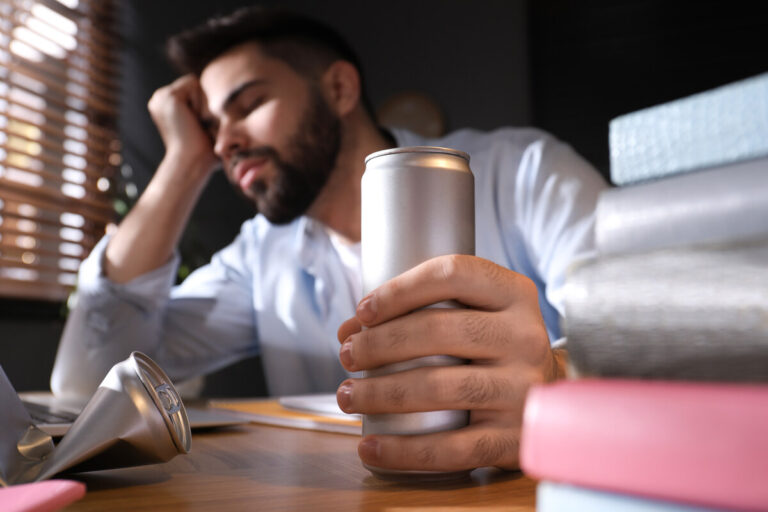
- Do you depend on coffee or energy drinks to get through lectures?
- Do you doze off quickly in a quiet room or during a long reading?
If you answered yes to any of these, research suggests you are more likely running on a deficit than built for short sleep.
The takeaway: a true short-sleeper gene is rare, and the feeling of being fine on five hours is not proof you have one. If you sleep well but still feel exhausted, or can’t fall or stay asleep, talk with your campus health center or a doctor, since ongoing sleep problems can have causes worth checking.