

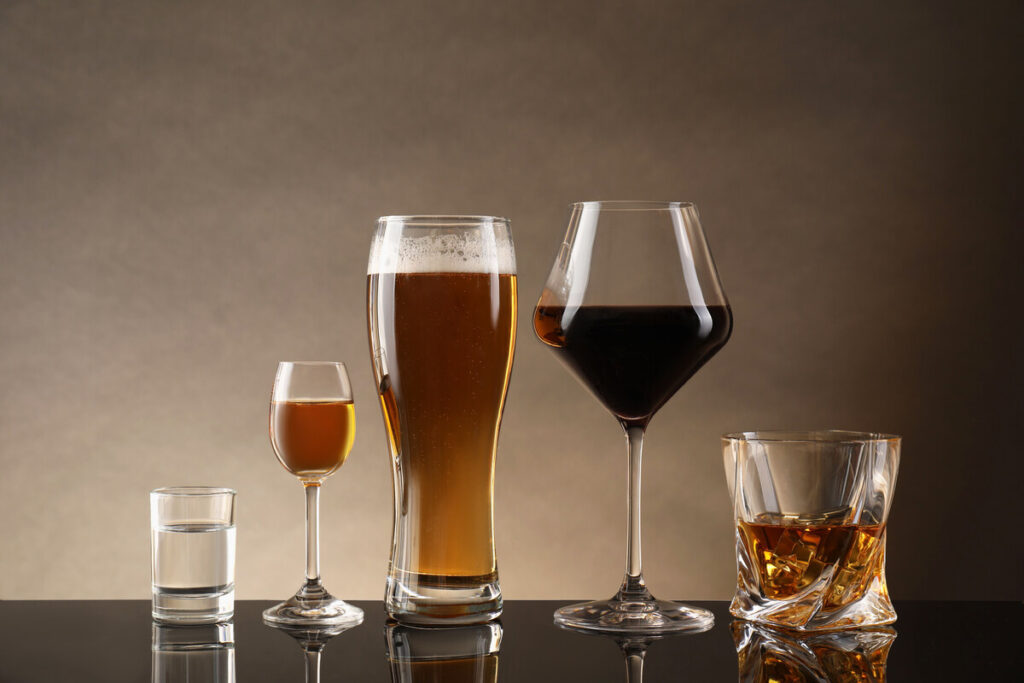
If you have ever heard that liquor is “cleaner” than beer, or that a glass of wine is basically good for you, a large new study complicates both ideas. Researchers who followed 340,924 adults in the UK for more than 13 years found that beer and spirits were linked to a higher risk of death even at low to moderate levels, while wine showed a different pattern that comes with an important catch.
What the researchers looked at
The study, published in Nutrition Journal in 2026 by a team led by researchers at Central South University in China, with coauthors at institutions including Erasmus MC in the Netherlands and Stanford University, used data from UK Biobank. That project enrolled adults aged 40 to 70 between 2006 and 2010 and then tracked their health through national death records.
Participants reported how often they drank and how much of each type of drink they usually had. The team excluded former drinkers and people who already had heart disease or cancer, then compared everyone against a reference group of people who never or only occasionally drank (20 grams of alcohol a week or less, roughly one and a half U.S. standard drinks). Over an average follow-up of 13.4 years, 22,381 participants died.
To translate the numbers: according to the National Institute on Alcohol Abuse and Alcoholism, one U.S. standard drink holds about 14 grams of pure alcohol. That is a 12-ounce regular beer, a 5-ounce glass of wine or a 1.5-ounce shot of 40% liquor. In the study, “high” drinking meant more than 40 grams a day for men (close to three standard drinks) and more than 20 grams a day for women (about one and a half).
Beer and liquor: higher risk, even at lower amounts
Across all drink types, heavy drinking stood out. Compared with the never or occasional group, high total intake was associated with a 24% higher risk of dying from any cause and a 36% higher risk of dying from cancer. Moderate drinking was linked to higher cancer mortality as well.
When the researchers split alcohol by source, beer, cider and spirits drove most of the risk. Alcohol from these drinks, even at low to moderate levels, was associated with higher mortality from all causes, heart disease and cancer. At moderate to high levels, the links were especially strong for cancers of the head and neck, the respiratory system, the digestive tract and the liver.
In other words, switching from beer to shots does not look like a safer trade. Both landed on the same side of the ledger.
Why the wine result needs caution
Low to moderate wine drinking was associated with lower mortality, and the curve for wine was J-shaped: the benefit disappeared at high intake, where wine was tied to more cancer deaths. Heavy white wine drinking was linked to a 16% to 25% higher risk of several causes of death.
Before you read that as a reason to order wine, look at who drank it. In this group, heavy wine drinkers were more likely to be women and white and to have a higher-quality diet, while heavy beer drinkers tended to have lower education and lower diet quality. The authors adjusted for many of these factors, but they note that, as an observational study, it cannot fully rule out other hidden differences. It also relied on drinking habits reported once, mostly by white, middle-aged adults in the UK.
This is a known problem in alcohol research. A 2024 meta-analysis in the Journal of Studies on Alcohol and Drugs reviewed 107 studies and found that the higher-quality ones, which used younger cohorts and kept former and occasional drinkers out of the comparison group, estimated a similar death risk for low-volume drinkers and non-drinkers. Its authors concluded that such biases “may create misleading positive health associations.”
Two findings that are useful at any age
The study also looked at when people drank. Compared with drinking outside of meals, people who sometimes or usually drank with food had a 7% to 22% lower risk across the causes of death examined. Drinking away from meals made the associations worse for moderate and heavy beer and spirits drinking, and for heavy wine drinking.
And the link between total alcohol and death from any cause was stronger among younger participants, men and smokers. Everyone in the study was at least 40 when they enrolled, so it says little directly about 19-year-olds, but it offers no sign that youth protects anyone from alcohol’s effects.
What this means for you
- The amount matters more than the label. Count standard drinks, not cans or cups: a tall pour or a strong craft beer can add up to two.
- Liquor is not a lighter option than beer in this data, and wine is not a health drink.
- If you do drink, eating first and pacing yourself are simple habits with some support here.
- Not drinking at all carries none of these risks. If you are worried about your own drinking, your campus health or counseling center is a confidential place to start.