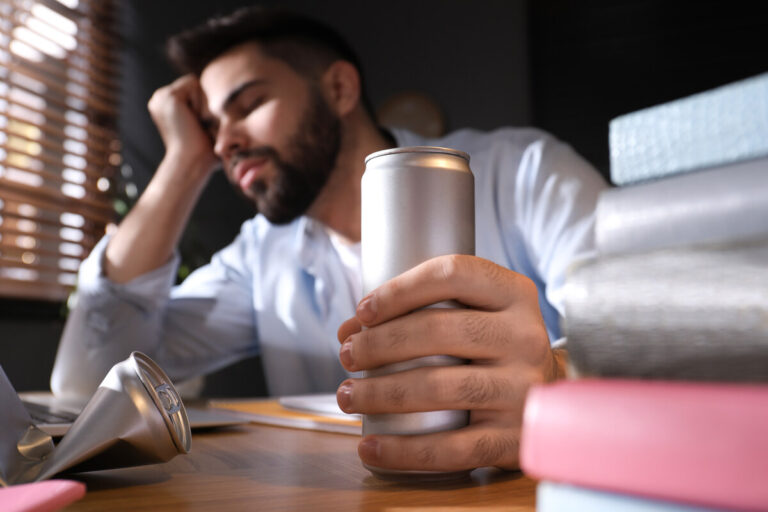


If finals week runs on coffee, there is some reassuring news, with an important warning attached. A new American Heart Association statement says up to five cups of coffee a day is safe for most adults, but energy drinks are a different story.
The American Heart Association (AHA) published the scientific statement “Caffeine and Cardiovascular Disease” in the journal Circulation on July 20, 2026. It reviews the latest research, mostly on coffee.
What the statement says
According to the AHA’s announcement, up to 400 mg of caffeine a day, or no more than three to five 8-ounce cups of regular black coffee, is considered safe for most adults. “Black” means without added sugar, sweeteners, flavors or fillers.
Coffee without additives was linked to a lower risk of type 2 diabetes, heart disease, stroke, heart failure and some irregular heart rhythms. Adding sugar, syrups, milk or cream likely reduces those potential benefits, though the AHA says more research is needed on that.
Where energy drinks fit in
This is the part most relevant for students. The statement links higher caffeine intake, such as levels found in energy drinks and energy shots, to cardiovascular harm, including an increased risk of high blood pressure and irregular heart rhythm.
The numbers explain why. A regular brewed coffee typically contains 9.4 to 20.6 mg of caffeine per fluid ounce. Energy shots can contain 40 to 69 mg per fluid ounce, three to four times more caffeine than regular coffee.
Not every cup is the same
- Caffeine varies. At 9.4 to 20.6 mg per ounce, an 8-ounce cup works out to roughly 75 to 165 mg, so five cups is not always the same dose.
- Your body matters. How quickly you process caffeine depends on genetics, metabolism, age and past caffeine use. Caffeine usually peaks within an hour.
- Some people feel it more. Short-term effects can include a higher heart rate and blood pressure, heart palpitations and disrupted sleep.
- Unfiltered coffee is different. Espresso, French press, Turkish and boiled coffee contain cafestol, which the AHA says was linked to higher LDL cholesterol in randomized trials. Paper-filtered and instant coffee do not.
What the statement cannot prove
Most caffeine research is observational, which means it cannot prove cause and effect, and the benefits seen with coffee may come from other compounds in it rather than from caffeine. The AHA also says more research is needed on other sources of caffeine and on how effects vary between people.
The recommendation refers to most adults. It is not personal medical advice, and it does not say the same limit applies to everyone. If coffee gives you palpitations or wrecks your sleep, that is a reason to talk to a doctor or your campus health center, whatever the general guidance says.
The statement: Gregory M. Marcus and colleagues, “Caffeine and Cardiovascular Disease: A Scientific Statement From the American Heart Association”, Circulation, 2026.