

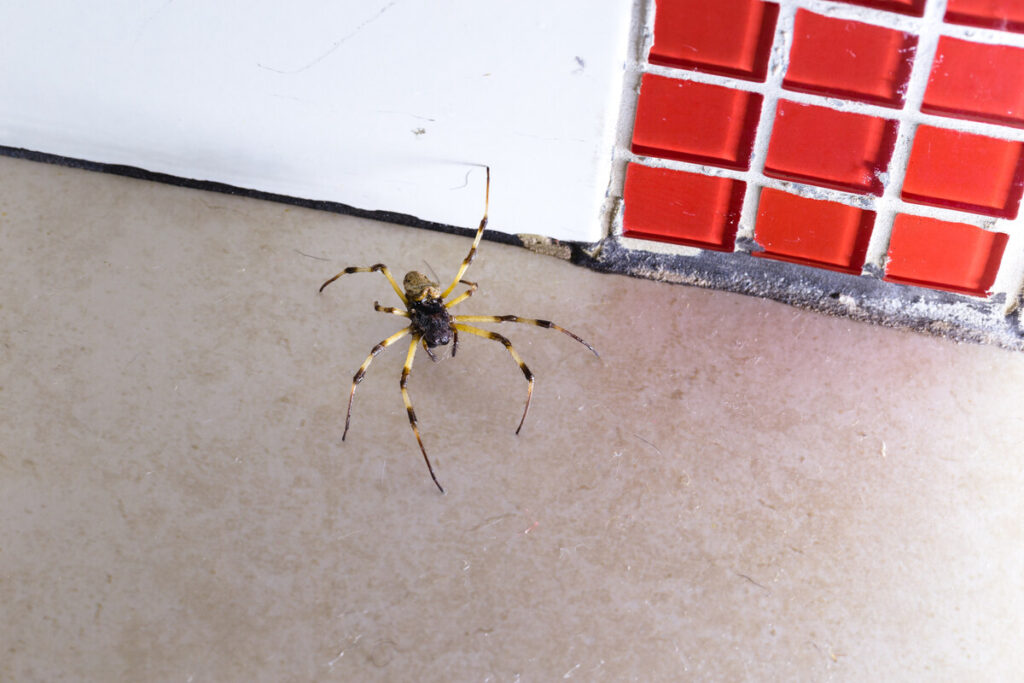
If a spider seems to cross your dorm room floor every evening this time of year, it is easy to assume it came in to escape the cold. Spider researchers say that story is mostly wrong, and the real explanation is a lot less alarming.
Most house spiders never lived outside
The spiders you find indoors are usually not the same species you see in the yard. According to arachnologist Rod Crawford of the Burke Museum at the University of Washington, house spiders belong to a small group of species adapted to indoor life: a steady climate, little food and very little water. They tend to spread from building to building as egg sacs carried on furniture and building materials, then spend their whole lives in the same structure.
Crawford’s estimate is striking: generally fewer than 5% of the spiders you see indoors have ever been outdoors. Of the 170 spider species he counts around Seattle, only 8 are commonly found both outside and inside houses. Outdoor spiders are not drawn to warmth either. They simply slow down and go dormant as temperatures drop.
A survey of 50 homes in and around Raleigh, North Carolina, published in PeerJ, points the same way: spiders were among the four groups that made up most of the arthropod diversity found indoors, and benign species turned up more often than common pests. Sharing a building with spiders is the normal state of things, not a sign that something is wrong.
So why do you suddenly see them
What changes in late summer and fall is behavior, not numbers. The spiders that suddenly appear on walls and floors are mostly mature males wandering in search of a mate, while females and young stay hidden in storage areas, wall voids and behind furniture. Timing depends on the species and the region. Crawford notes that for many house spiders the peak is August and September, which is hardly the coldest part of the year.
A fast spider moving alone across the room, with no web around it, is typically one of these wandering males. Once the mating season ends, they mostly disappear from view again.
Are you likely to get bitten
Bites are much rarer than most people think. Crawford writes that a spider might wander onto a bed about twice a year, and that keeping blankets from touching the floor or walls brings that close to zero. Over a 44-year career handling tens of thousands of live spiders, he reports being bitten three times, with only trivial effects.
Two studies back this up. In a home in Lenexa, Kansas, researchers collected 2,055 brown recluse spiders over six months, at least 400 of them large enough to bite, and none of the people living there were envenomated. In an emergency department study published in The Journal of Emergency Medicine, 182 patients came in believing a spider had bitten them. Only 7 (3.8%) were diagnosed with actual spider bites, while 156 (85.7%) had skin and soft tissue infections.
That last finding matters for your health more than the spider does. If a sore you blame on a “bite” is getting bigger, hotter or more painful, or comes with a fever, it is worth a visit to your campus health center, since an infection may need treatment. A few US species, like black widows and brown recluses, can cause real medical problems, so if you were truly bitten and feel unwell, get checked rather than waiting it out.
What actually helps in a dorm or apartment
- Skip the sprays. The Burke Museum explains that household insecticides mainly kill the spiders they hit directly, and that egg sacs resist them. Spiders also quickly move back into treated areas.
- Do not count on home remedies. Crawford found no evidence that hedge apples or similar “repellents” keep spiders away, and spiders rarely show signs of detecting airborne smells.
- Use a cup and a sheet of paper. It is the simplest way to move a wandering spider out of your room without touching it.
- Keep bedding off the floor and vacuum corners. Less clutter means fewer hiding spots, and it keeps visitors off your bed.
- Report gaps, do not seal vents. Crawford recommends sealing cracks and openings to keep spiders out. In campus housing, ask your RA or submit a maintenance request instead of blocking air vents yourself.
As the Burke Museum’s spider myths series puts it, “Everything that ‘everybody knows’ about spiders is wrong!” If spiders genuinely scare you, that fear is common and real, and your campus counseling center can help if it gets in the way of daily life.