

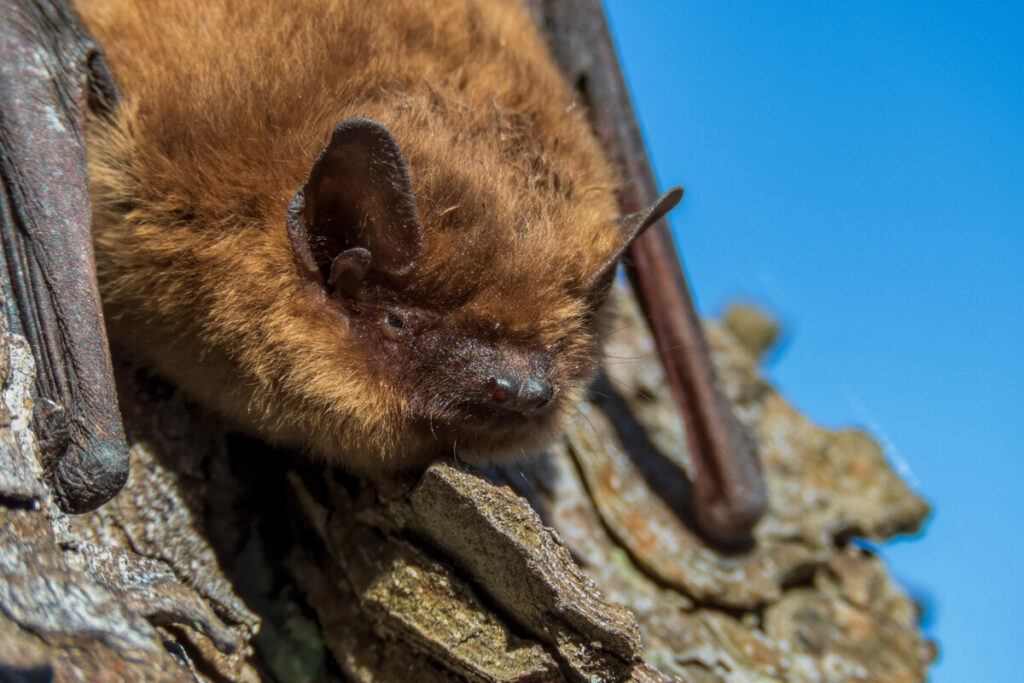
A bat fluttering around your dorm room at 2 a.m. feels like a horror movie, and the instinct is to open the window and wait for it to leave. If you were asleep when it got in, US health officials say that is the one move to avoid.
Bats are not out to get you, and most never carry rabies. But in the United States, they are the main way people catch it. Here is what the research and federal guidance actually say, and what to do in the moment.
Why bats matter more than dogs for rabies in the US
A CDC review of human rabies cases from 1960 to 2018 counted 125 cases in the country. Of the 89 infections acquired inside the US, 62 (70%) were traced to bats.
The same report notes that about 55,000 people a year seek post-exposure treatment after contact with an animal that might be rabid, and most of those visits involve pets and other domestic animals. The authors point to two likely reasons bats still cause most deaths: people do not realize bats are a rabies risk, and bat bites and scratches can be so small they go unnoticed.
That second point is the key. A bat’s teeth are tiny. You can be bitten in your sleep and wake up with no visible mark.
What went wrong in three deaths in 2021
In the fall of 2021, the CDC confirmed three human rabies deaths linked to bat exposures in Idaho, Illinois and Texas, after only three such deaths in the previous four years. The report describes avoidable steps: one person picked up a bat with bare hands, one had bats roosting in the home, and two released the bat after contact instead of having it tested. Two did not realize they were at risk at all. The third had the bat tested (it was positive) but turned down treatment.
The report’s guidance is direct. When someone has known or possible contact with a bat, “including while sleeping,” the bat should be safely captured, if possible, and tested.
When a bat in the room counts as an exposure
The CDC’s rabies prevention recommendations say that finding a bat in the same room as someone who might not know they were touched can count as an exposure. The examples include a deeply sleeping person who wakes up to find a bat in the room, and a bat found with someone who is intoxicated. For a college dorm, both situations are realistic.
Those situations stop counting as exposures if testing rules rabies out in the bat. That is why letting it fly out the window can turn an easy answer into weeks of uncertainty.
What to do if a bat shows up in your room
- Do not touch it with bare hands, and do not swat at it.
- Close the door so it stays in one room, and keep roommates and pets out.
- Call for help. In a dorm, that usually means your RA, the housing office or campus facilities after hours. The CDC’s bat guidance says to contact animal control or your local health department to capture it, and not to release it until you have talked with a public health expert.
- If it must be caught right away, the CDC describes using leather work gloves, a box or jar, and a piece of cardboard slid under the opening once the bat has landed, then taping it shut.
- Get checked if there is any chance of contact: you were asleep, you were drinking, or you felt something touch you. Go to the campus health center or an urgent care and say a bat was in the room.
If a bat flies in while you are awake and you are sure nobody touched it, ask your local health department whether it is fine to let it out. Do not decide on your own when there is any doubt.
Why speed matters
Rabies is almost always fatal once symptoms appear. Treatment after exposure is a short series of shots, and the CDC’s recommendations describe it as “uniformly effective when appropriately administered.” The risk is not the shots. It is waiting or assuming nothing happened.
This article is general information, not medical advice. If you think you had contact with a bat, contact a health professional or your campus health service the same day.