

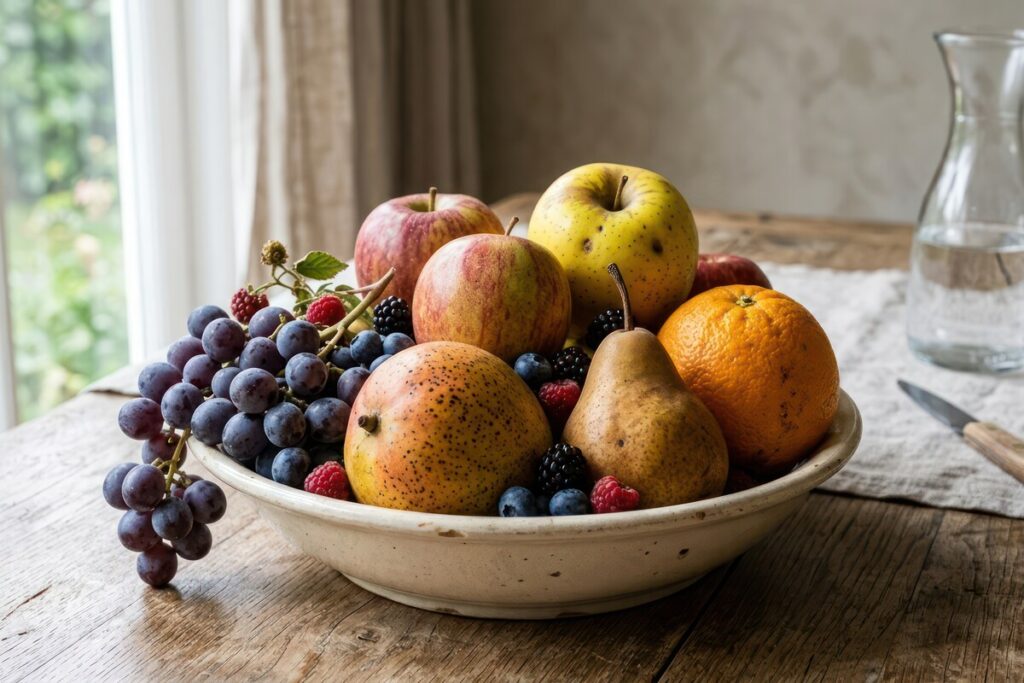
A large US cohort study found that eating certain whole fruits was linked to a lower risk of type 2 diabetes, while drinking fruit juice was linked to a higher one. The gaps are modest, and they show an association, not proof.
If your breakfast is a glass of orange juice from the dining hall, this one is for you. Researchers from Harvard analyzed the diets of more than 187,000 American adults to see whether all fruit affects diabetes risk in the same way. It turns out the answer depends on the fruit, and on whether you eat it or drink it.
What the study actually did
The work, published in the BMJ, pooled three long-running US studies of health professionals: 66,105 women from the Nurses’ Health Study, 85,104 women from the Nurses’ Health Study II, and 36,173 men from the Health Professionals Follow-up Study. None had major chronic disease at the start. Over roughly 3.5 million person-years of follow-up, 12,198 of them developed type 2 diabetes.
Participants reported what they ate through regular questionnaires, and the researchers compared diabetes risk for every three extra servings per week of each fruit.
Which fruits stood out
After adjusting for other lifestyle and dietary risk factors, total whole fruit showed only a tiny association (a hazard ratio of 0.98). The picture changed fruit by fruit:
- Blueberries: about 26% lower risk per three weekly servings
- Grapes and raisins: about 12% lower
- Apples and pears: about 7% lower
- Bananas and grapefruit: about 5% lower each
- Oranges and strawberries: no clear association
- Cantaloupe: about 10% higher
Fruit juice went the other way: three extra servings a week were linked to about 8% higher risk. The authors suggest that fiber, and how quickly sugar reaches the bloodstream, may play a role, but the study cannot prove why.
Why this does not mean you should panic or swap everything
Several limits matter before you change your grocery list:
- This is an observational study, so it shows links, not cause and effect.
- Diet was self-reported, which is never perfectly accurate.
- Participants were health professionals who were mostly middle-aged or older, not college students, and diabetes developed over decades.
- A 7% or 8% difference in relative risk is small, and it says little about any one person.
What it means on a student budget
You do not need blueberries specifically. Apples and bananas are usually cheap, easy to keep in a dorm room, and fit the same pattern. Frozen berries are a practical option when fresh ones cost too much. If you drink juice daily, the study gives you a reason to try swapping some of those glasses for a piece of whole fruit, which also tends to keep you full longer.
None of this replaces personal advice. If diabetes runs in your family or you have symptoms such as constant thirst or unusual fatigue, talk with your campus health center or a doctor rather than relying on a headline.