

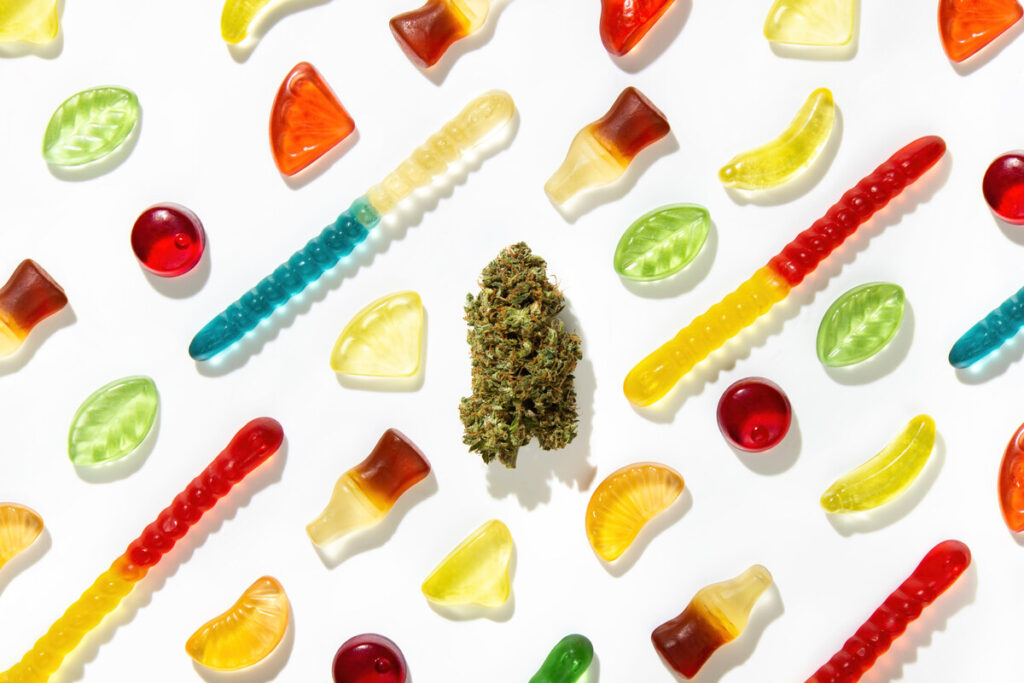
A gummy, vape or “hemp” product at a gas station or smoke shop is not automatically the mild, non-intoxicating CBD many people picture. Some contain lab-converted cannabinoids such as delta-8 THC or HHC, and the label may not tell you which one or how much.
Why “hemp” and “CBD” are not the same thing
CBD is one compound from the cannabis plant. It is not what gets you high. Delta-8 THC is a different compound, and it is psychoactive and intoxicating. The natural amount of delta-8 in hemp is very low, so most of what is sold is made by chemically converting CBD.
The FDA describes this in its consumer update on delta-8 THC. It warns that some manufacturers “may use potentially unsafe household chemicals” in that process and that products may carry harmful by-products. It also notes that some products are labeled simply as “hemp products,” which “may mislead consumers who associate ‘hemp’ with ‘non-psychoactive.'”
What the FDA has recorded
The agency’s figures are older (the page is current as of May 2022), and they come from voluntary reports, so they show that problems occur, not how often. Still, they are specific:
- 104 adverse event reports to the FDA between December 2020 and February 2022. About 77% involved adults, and 55% needed intervention such as emergency medical services or hospital admission.
- 2,362 poison center exposure cases between January 2021 and February 2022. About 70% needed evaluation at a health care facility.
- Reported effects included hallucinations, vomiting, tremor, anxiety, dizziness, confusion and loss of consciousness.
Many reports involved edibles. That matters for students: a gummy can look like candy, and effects from edibles can take a while to show up, which makes it easy to take more.
The same pattern is showing up in Europe
A French researcher recently described the same trend in The Conversation. Products sold under a “CBD” label increasingly contain semi-synthetic cannabinoids such as HHC, with effects sometimes as intense as THC. Europe’s drug agency counted 40 chemically converted cannabinoids at the end of 2025, up from 24 a year earlier, according to that article. France’s addiction-monitoring network logged about 500 exposure cases between early 2025 and April 2026. Most involved teenagers, and the majority were considered serious. That data is from France and mostly younger people, so it does not translate directly to US campuses. It does show how fast the product mix changes.
A practical checklist
- Ask for a lab report (certificate of analysis) that lists every cannabinoid, not just CBD. No report is a reason to skip the product.
- Treat “hemp,” “CBD” and “legal” as marketing words, not safety information.
- Know your state’s rules. Laws on delta-8 and similar products differ by state and keep changing, and your campus policy may be stricter than state law.
- Keep edibles away from roommates, pets and anyone who might mistake them for regular candy.
If you or a friend feels very sick after using a product, such as repeated vomiting, confusion or trouble staying conscious, call Poison Control at 1-800-222-1222 or emergency services. Your campus health center can also talk through questions about use without judgment. This article is general information, not medical advice.