

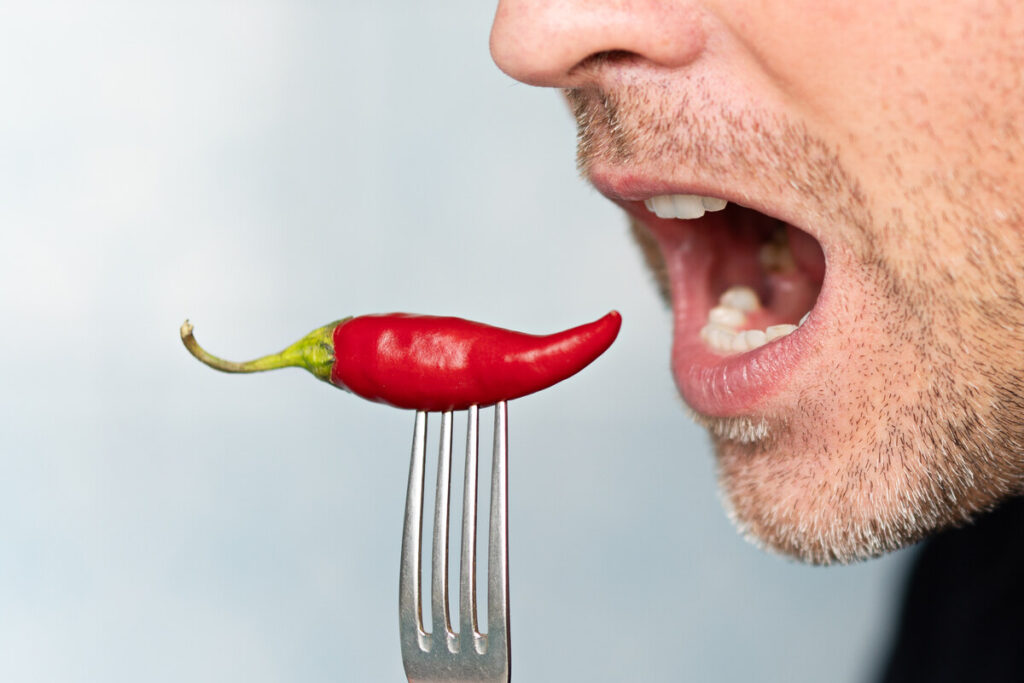
Eating the hottest pepper or chip you can find and filming your reaction is a social media classic. Poison center records show the result is usually a few miserable hours, but not always, and some people are more vulnerable than they realize.
What is actually happening in your mouth
The heat in chili peppers comes from capsaicin. It does not burn tissue the way a hot stove would. Instead, it activates a nerve receptor called TRPV1, which normally reports rising temperature to the brain. Your body reacts as if it were overheating: your face flushes, you sweat, your eyes water and your nose runs, even though nothing is actually hotter.
In small amounts, that sensation fades within about 20 minutes as capsaicin lets go of the receptors, according to a July 2026 review by ANSES, France’s food and health safety agency. At challenge doses, the burn can travel the whole length of the digestive tract, from mouth and throat to stomach, with nausea, vomiting and diarrhea along the way. ANSES also lists less common but more serious effects: higher blood pressure, heart palpitations and fainting.
What poison centers have seen
In the United States, the Poison Control Center at Children’s Hospital of Philadelphia noticed a wave of calls from school nurses at the start of the 2021 school year, tied to a single ultra-hot tortilla chip flavored with Carolina Reaper and Scorpion peppers. Pooling its data with the Miami poison center, it counted 30 calls about the chip in two months. Reported symptoms included oral burning (46%), abdominal pain (43%), vomiting (23%) and eye pain (10%). The symptoms were described as highly unpleasant but temporary, usually clearing within several hours.
The ANSES review offers a larger picture from France. Between 2021 and 2025, 124 people called a French poison center after symptoms from spicy food. Their average age was 18, and 39% had eaten the food as part of a challenge. Plain chili peppers were involved most often (59% of cases), ahead of spicy chips (19%) and hot sauces (17%). Nearly every case was mild. The exception was a 28-year-old woman with a history of allergies who developed swelling of the face and throat after a spicy chip challenge and needed emergency care.
The case that put these challenges in the headlines was a 14-year-old in Massachusetts who died in 2023 after eating a single extremely hot chip. The medical examiner linked his death to cardiac arrest after eating a food with a high capsaicin concentration, and also found an enlarged heart and a congenital heart defect, according to reporting on the autopsy. The product was pulled from store shelves.
Who should think twice
Tolerance varies a lot between people. ANSES notes that people with heart conditions or digestive problems are particularly sensitive to capsaicin, and that allergic reactions have been reported. Many heart conditions go unnoticed until something stresses the heart, so “I feel fine” is not proof that a challenge is safe for you. If you have asthma, reflux, an ulcer or any heart issue, this is one trend worth skipping.
What helps when the burn gets too intense
A Penn State team tested this directly. In a 2019 study in Physiology & Behavior, 72 participants drank spicy tomato juice, then one of several drinks, and rated the burn every 10 seconds for two minutes. Every drink lowered the burn to some degree, but whole milk, skim milk and Kool-Aid gave the biggest reductions. The authors concluded that milk worked best whether it was skim or whole, which suggests its proteins matter more than its fat. Water and seltzer helped less.
Practical options, based on the studies and poison center advice above:
- Sip cold milk, or eat yogurt or ice cream.
- Try starchy food such as bread, rice or potatoes, which ANSES also recommends.
- Rinse your eyes or skin if pepper got on them, and use gloves when handling very hot peppers.
- For questions or symptoms that do not ease, call Poison Help at 1-800-222-1222 (free, 24/7).
- Call 911 for any swelling of the face or throat, trouble breathing, chest pain or fainting.
The bottom line
Most people who try an extreme pepper challenge end up with a few hours of pain and nothing worse. But the data covers people who called for help, not everyone who took part, and the rare serious cases tend to involve someone with an underlying condition they may not have known about. If you have concerns about your own health, your campus health center is a good place to ask before you try it.